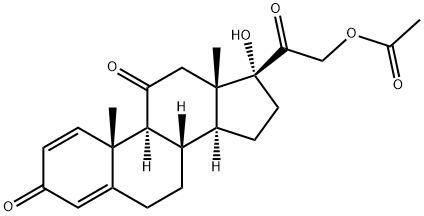
Prednisone acetate (5 mg/kg, Intragastric gavage, once a day for 4 weeks) induces hippocampal LTP impairment by causing neuronal lesions in the dentate gyrus, which reduced glutamic acid (Glu) and NMDAR2A, and impaired spatial memory in Hippocampal LTP impairment model mice[1].
Prednisone acetate (6 mg/kg, gavage, once a day for 15 days) reduces ocular and peripheral inflammatory responses and restores Th1/Th2 and Th17/Treg immune homeostasis through orchestrating the Notch signaling pathway in Experimental autoimmune uveitis (EAU) rats[2].
| Animal Model: | C57BL/6 mice [1] |
| Dosage: | 5 mg/kg |
| Administration: | Intragastric gavage (i.g.) |
| Result: | Significantly failed to gain weight.
Decreased the population spike (%) after high-frequency stimulation.
Reduced the crossing times compared with the control group.
Resulted in the impairment of memory, and caused a trend of more serious impairment.
Reduced the levels of Glu and gamma-aminobutyric acid (GABA) in the hippocampus.
Reduced the expressions of N-methyl-D-aspartate receptors in the hippocampus. |
| Animal Model: | Experimental autoimmune uveitis [2] |
| Dosage: | 6 mg/kg |
| Administration: | gavage |
| Result: | Showed fewer manifestations in eyes from day 9 after immunization.
Reduced the inflammation in EAU rats.
Bound with the pocket of Notch signaling-related molecules with good affinity.
Exhibited anti-inflammatory effects through inhibiting Notch signaling activation.
Decreased Th1, Th17 and increased Th2, Treg frequencies in EAU. |