Description
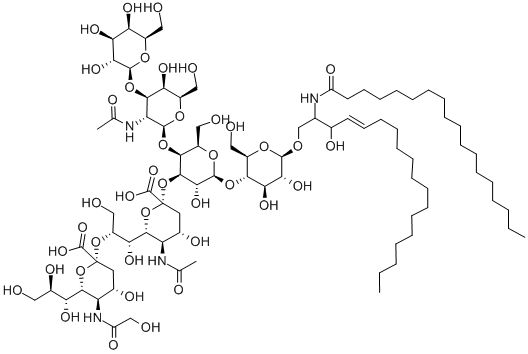
Ganglioside G
D1b is an acidic glycosphingolipid that contains two sialic acid residues linked to an inner galactose unit. It is a component of plasma membranes where it packs densely with cholesterol to form lipid microdomains that modulate both intra- and intercellular signaling events. The concentration of ganglioside G
D1b in human brain increases with age, constituting 7.85% of total sialic acid in the brain of 0- to 10-year-old subjects and 20.29% in 11- to 30-year-old subjects. Ganglioside G
D1b levels are positively correlated with pilocytic astrocytoma tumor grade, and G
D1b has been detected in various other gliomas, including primitive neuroectodermal tumors, glioblastomas, and anaplastic astrocytomas. Ganglioside G
D1b mixture contains ganglioside G
D1b molecular species with C18:1 and C20:1 fatty acyl chains.
Uses
Ganglioside GD1b Disodium Salt (Bovine Brain) is a ganglioside, major constituents of neuronal cell membranes and endoplasmic reticulum that have been shown to modulate cell signal transduction.
General Description
Gangliosides are major constituents of neuronal cell membranes and endoplasmic reticulum; contain a sialated polysaccharide chain linked to ceramide through a β-glycosidic linkage; for classification of gangliosides see Svennerholm, L., et al. (eds.),
Structure and Function of Gangliosides, New York, Plenum, 1980.
Biochem/physiol Actions
May act as a bacterial toxin receptor (tetanus, botulinus); high levels found in gliomas and astrocytomas.
References
[1] L RIBONI. Natural occurrence of ganglioside lactones. Isolation and characterization of GD1b inner ester from adult human brain.[J]. The Journal of Biological Chemistry, 1986, 261 18: 8514-8519.
[2] T. COMAS. Immunohistochemical staining for ganglioside GD1b as a diagnostic and prognostic marker for primary human brain tumors.[J]. Neuro-oncology, 1999, 1 4 1: 261-267. DOI:
10.1093/neuonc/1.4.261