Synthesis

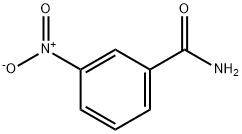
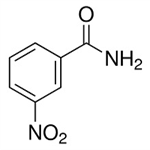
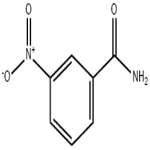
The general method is as follows: The synthesis of 3-nitrobenzamide is based on the synthesis of 4-nitrophenol described below. Add 1 mmol of 69% nitric acid (1 mmol) and 1 mmol of the transition metal complex ([Co(NH3)5Cl]Cl2) to a dichloromethane solution of phenol (1 mmol). Stir the reaction mixture at room temperature for 2 hours. Monitor the reaction progress by TLC. After the reaction is indicated by TLC completion, treat the reaction mixture with sodium carbonate solution. Extract the reaction mixture with dichloromethane. Separate the organic layer, dry with sodium sulfate, and evaporate to obtain the crude product. Purify the crude product on silica gel to obtain 4-nitrophenol as the product. 3-Nitrobenzamide, yield 82%.
Chemical Properties
yellow powder
General Description
Yellow powder.
Air & Water Reactions
Insoluble in water.
Reactivity Profile
A nitrated amide. Organic amides/imides react with azo and diazo compounds to generate toxic gases. Flammable gases are formed by the reaction of organic amides/imides with strong reducing agents. Amides are very weak bases (weaker than water). Imides are less basic yet and in fact react with strong bases to form salts. That is, they can react as acids. Mixing amides with dehydrating agents such as P2O5 or SOCl2 generates the corresponding nitrile. The combustion of these compounds generates mixed oxides of nitrogen (NOx).
Fire Hazard
Flash point data for 3-NITROBENZAMIDE are not available, however, 3-NITROBENZAMIDE is probably combustible.