Description
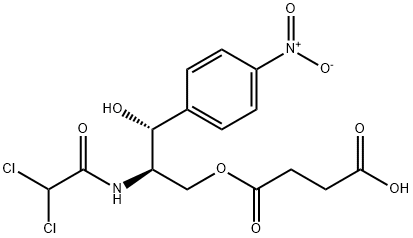
Chloramphenicol succinate is a water-soluble prodrug form of the antibiotic chloramphenicol. It is a substrate for succinate dehydrogenase (SDH) and is oxidized by human liver and rat liver and kidney mitochondria to release chloramphenicol
in vitro. Chloramphenicol succinate reduces human leukocyte migration
in vitro.
In vivo, chloramphenicol succinate reduces
E. coli growth in rabbit and rat models of pyelonephritis when administered at doses of 150 and 200 mg/kg, respectively. Chloramphenicol succinate (20 mg/kg) reduces infarct size in a porcine model of myocardial ischemia-reperfusion injury. Formulations containing chloramphenicol succinate have been used in the treatment of severe bacterial infections.
Uses
Chloramphenicol succinate is prepared by acylation of chloramphenicol with succinic anhydride to provide a water soluble pro-drug. Chloramphenicol succinate represents an alternative pro-drug strategy for chloramphenicol that has found a niche in surface antibiotic treatment in surgery. Chloramphenicol succinate is significantly less active than chloramphenicol but acts as a prodrug, forming chloramphenicol in the presence of succinate dehydrogenase.
References
[1] C CONCILIO R S. [A new water-soluble derivative of chloramphenicol].[J]. Il Farmaco; edizione scientifica, 1956, 11 1: 10-20.
[2] C.S. AMBEKAR . Chloramphenicol succinate, a competitive substrate and inhibitor of succinate dehydrogenase: possible reason for its toxicity[J]. Toxicology in Vitro, 2004, 18 4: Pages 441-447. DOI:
10.1016/j.tiv.2003.12.010[3] A FORSGREN D S. Effect of antibiotics of chemotaxis of human leukocytes.[J]. Antimicrobial Agents and Chemotherapy, 1977, 11 4: 580-584. DOI:
10.1128/aac.11.4.580[4] V PRáT. [Effect of chloramphenicol against different E. coli strains in vitro and in experimental pyelonephritis].[J]. Arzneimittel-Forschung-Drug Research, 1968, 18 9: 1123-1127.
[5] JAVIER A SALA-MERCADO. Profound cardioprotection with chloramphenicol succinate in the swine model of myocardial ischemia-reperfusion injury.[J]. Circulation, 2010, 122 11 Suppl: S179-84. DOI:
10.1161/circulationaha.109.928242