Uses
Orobol is one of the major soy isoflavones and has various pharmacological activities, including anti-skin-aging and anti-obesity effects. Orobol inhibits CK1ε, VEGFR2, MAP4K5, MNK1, MUSK, TOPK, and TNIK (IC50=1.24-4.45 μM). Orobol also inhibits PI3K isoforms (IC50=3.46-5.27 μM for PI3K α/β/γ/K/δ)[1][2].
Definition
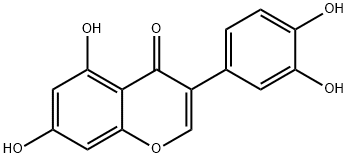
ChEBI: Orobol is a member of the class of 7-hydroxyisoflavones which consists of isoflavone substituted by hydroxy groups at positions 5, 7, 3' and 4'. It has been isolated from the mycelia of Cordyceps sinensis. It has a role as an anti-inflammatory agent, a radical scavenger, a plant metabolite and a fungal metabolite. It is functionally related to an isoflavone.
in vivo
Orobol attenuates high fat diet-induced weight gain and lipid accumulation without affecting food intake in C57BL/6J mice[2].
| Animal Model: | HFD-induced obesity in C57BL/6J mice[2] |
| Dosage: | 10mg/kg |
| Administration: | Intragastrically; daily for 23 weeks |
| Result: | Significantly reduced body weight by 17.3% compared to the HFD group.
|
target
PI3K | Caspase | Bcl-2/Bax | Calcium Channel | Antifection | Influenza virus
References
[1] Kim MH, et al. Lipid Nanoparticles for Enhancing the Physicochemical Stability and Topical Skin Delivery of Orobol. Pharmaceutics. 2020;12(9):845. Published 2020 Sep 3. DOI:
10.3390/pharmaceutics12090845