Uses
Pratensein, a flavonoid, ameliorates β-amyloid-induced cognitive impairment in rats via reducing oxidative damage and restoring synapse and BDNF levels[1].
Definition
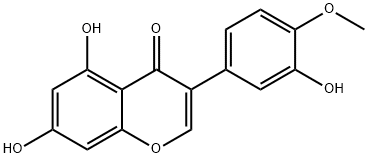
ChEBI: A member of the class of 7-hydroxyisoflavones in which isoflavone is substituted by hydroxy groups at the 5, 7, and 3' positions, and by a methoxy group at the 4' position.
in vivo
Pratensein significantly attenuates neuronal degeneration and apoptosis in hippocampus. The over-expression in IL-1β and TNF-α as well as the extensive astrogliosis and microgliosis in hippocampus induced by Aβ1-42 are significantly reduced following administration of Pratensein. Pratensein treatment significantly suppresses the activation of NF-κB in hippocampus. Pratensein is able to increase the levels of synaptophysin and brain-derived neurotrophic factor (BDNF)[1].
Pratensein (20 mg/kg; p.o.; once daily for 3 weeks) ameliorates learning and memory deficits in Aβ1-42 rat model of Alzheimer’s disease[1].
| Animal Model: | Male 10-week old Wistar rats[1] |
| Dosage: | 20 mg/kg |
| Administration: | P.o.; once daily for 3 weeks |
| Result: | The spatial learning and memory ability of rats was improved.
|
References
[1] Liang C, et al. Pratensein ameliorates β-amyloid-induced cognitive impairment in rats via reducing oxidative damage and restoring synapse and BDNF levels. Neurosci Lett. 2015;592:48-53. DOI:
10.1016/j.neulet.2015.03.003