Description
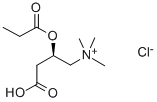
Propionyl-L-carnitine is a naturally occurring carnitine derivative formed by carnitine acetyltransferase during β-oxidation of uneven chain fatty acids. Propionyl-L-carnitine increases the basal release of prostaglandin E
2 (PGE
2; ) and 6-keto-prostaglandin F
1α in carrageenan-stimulated isolated rat peritoneal cells contaminated with neutrophils and increases the basal release of thromboxane B
2 (TXB
2; ) in non-contaminated cells. It reduces the production of reactive oxygen species (ROS) and decreases the expression of NADPH oxidase 2 (NOX2), NOX4, and ICAM-1 in human umbilical vein endothelial cells (HUVECs). It also increases the rate of revascularization and the hind limb vascular area in a rabbit model of hind limb ischemia when administered at a dose of 10 mg per animal. Propionyl-L-carnitine reduces mitochondrial dysfunction induced by ischemia, preventing mitochondrial calcium overload, and depletion of ATP tissue stores in a rabbit model of ischemia.
Chemical Properties
White Solid
Uses
L-Propionyl carnitine has been shown to improve the heart's mechanical recovery and other metabolic parameters after ischemia-reperfusion.
Uses
L-Propionyl carnitine has been shown to improve the heart''s mechanical recovery and other metabolic parameters after ischemia-reperfusion.
brand name
Dromos (Biosint S.p.A.).
References
[1] I M GARRELDS. Effects of carnitine and its congeners on eicosanoid discharge from rat cells: implications for release of TNFalpha.[J]. Mediators of Inflammation, 1993, 2 7: S57-62. DOI:
10.1155/s0962935193000778[2] MARIA ANTONIETTA STASI. Propionyl-L-carnitine improves postischemic blood flow recovery and arteriogenetic revascularization and reduces endothelial NADPH-oxidase 4-mediated superoxide production.[J]. Arteriosclerosis, Thrombosis, and Vascular Biology, 2010, 30 3: 426-435. DOI:
10.1161/atvbaha.109.201533[3] R FERRARI. The effect of propionyl-L-carnitine on the ischemic and reperfused intact myocardium and on their derived mitochondria.[J]. Cardiovascular Drugs and Therapy, 1991, 5 Suppl 1: 57-65. DOI:
10.1007/bf00128244