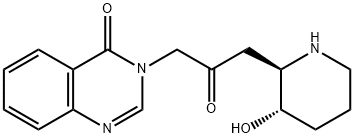
Description
Febrifugine is a quinazolinone alkaloid originally isolated from
D. febrifuga that has antimalarial activity. It reduces parasitemia and decreases mortality in mice infected with the
P. berghei strain NK65 when administered at a dose of 1 mg/kg per day beginning prior to or on the day of infection.
Chemical Properties
It is soluble in organic solvents such as methanol, ethanol, and DMSO, and is derived from Changshan.
Uses
Febrifugine is a quinazoline alkaloid with significant antimalarial and anticancerous efficacy. Febrifugine is an NRF2 inhibitor, that works with halofuginone for the treatment of chemo- and radio-resistant forms of cancer. Febrifugine analogs also functions as antimalarial, anticancer agents and in the prevention of chicken coccidiosis.
References
[1] J. B. KOEPFLI John A B Jr J F Mead. AN ALKALOID WITH HIGH ANTIMALARIAL ACTIVITY FROM DICHROA FEBRIFUGA1[J]. Journal of the American Chemical Society, 1947, 69 7: 1837. DOI:
10.1021/ja01199a513[2] NOEL P. MCLAUGHLIN Mark P Paul Evans. The chemistry and biology of febrifugine and halofuginone[J]. Bioorganic & Medicinal Chemistry, 2014, 22 7: Pages 1993-2004. DOI:
10.1016/j.bmc.2014.02.040[3] KIYOSHI MURATA . Potentiation by febrifugine of host defense in mice against plasmodium berghei NK65[J]. Biochemical pharmacology, 1999, 58 10: Pages 1593-1601. DOI:
10.1016/s0006-2952(99)00244-0