Description
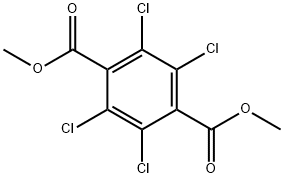
Chlorthal-dimethyl is a selective benzoic acid herbicide. It has a low aqueous solubility and a low to moderate volatility. It is considered to be moderately persistent in soil systems but can be stable in aquatic systems depending upon conditions. Based on its physico-chemical properties it is not expected to leach to groundwater. Its toxicity to fauna and flora is low to medium. It also has a low mammalian toxicity and no evidence has been found that suggests it will cause serious adverse health effects unless exposure is high.
Chemical Properties
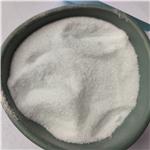
Colorless to gray crystalline solid. Practically
odorless.
Chemical Properties
Colorless crystalline
Uses
Selective, nonsystemic, preemergent herbicide to control most annual grasses and
many broad-leaved weeds.
Uses
Dacthal is used as a preemergent herbicide.
Uses
Pre-emergent herbicide.
Production Methods
Chlorthal-dimethyl is produced commercially through the esterification of tetrachloroterephthalic acid with methanol. The synthesis begins with the chlorination of terephthalic acid to introduce four chlorine atoms, forming tetrachloroterephthalic acid. This compound is then reacted with methanol in the presence of an acid catalyst, typically under reflux conditions, to yield the dimethyl ester, chlorthal-dimethyl. The reaction is carefully controlled to ensure complete esterification and high product purity.
Definition
ChEBI: Dacthal is a diester and a methyl ester.
Mechanism of action
Selective, non-systemic, acts by inhibiting seed germination. Microtubule assembly inhibition.
Potential Exposure
DCPA is an alkyl phthalate; benzene-
dicarboxylic acid herbicide, pesticide pre-emergent herbi-
cide is used on annual broadleaf weeds and grasses
in a wide spectrum of vegetable crops.
Environmental Fate
Soil. Bartha and Pramer (1967) reported that DCPA was degraded by soil microorganisms via cleavage of the herbicide molecule into propionic acid and 3,4-dichloroaniline.
The acid was mineralized to carbon dioxide and water and two molecules of 3,4-dichloroaniline were condensed to form 3,3′4,4′-tetrachloro-azobenzene. Metabolites identified
in soil and turfgrass thatch are monomethyl tetrachloroterephthalate and 2,3,5,6-tetrachloroterephthalic acid (Hartley and Kidd, 1987; Krause and Niemczyk, 1990). Residual
activity in soil and the half-life in soil were reported to be approximately 3 months (Hartley
and Kidd, 1987; Worthing and Hance, 1991)
Shipping
UN3077 Environmentally hazardous substances,
solid, n.o.s., Hazard class: 9; Labels: 9-Miscellaneous
hazardous material, Technical Name Required.
Incompatibilities
May react violently with strong oxidi-
zers, bromine, 90% hydrogen peroxide, phosphorus
trichloride, silver powders or dust. Incompatible with silver
compounds. Mixture with some silver compounds forms
explosive salts of silver oxalate.
Waste Disposal
Incineration in a unit with
efficient gas scrubbing. Containers must be disposed of
properly by following package label directions or by con-
tacting your local or federal environmental control agency,
or by contacting your regional EPA office.