Description
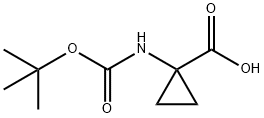
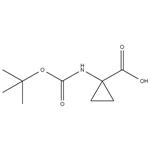
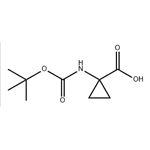
1-(Boc-amino)cyclopropanecarboxylic acid is an important organic compound. It is used in the biological field for the synthesis of irreversible inhibitors of tetrapeptide carboxypeptidases, leading to covalent substrate modifications; preparation of combinatorial libraries. It is used in the synthetic field as a pharmaceutical synthesis intermediate.
Chemical Properties
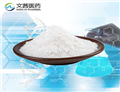
White crystalline powder
Uses
1-(Boc-amino)cyclopropanecarboxylic Acid is used as a reagent in the synthesis of pyrrolotriazinone derivatives as therapeutic PI3K inhibitors. Also used as a reagent in the synthesis of ether, carbamate and ester derivatives of adarotene as potential antitumor agents.
reaction suitability
reaction type: Boc solid-phase peptide synthesis
Synthesis
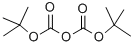
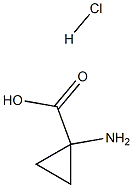
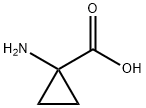
General procedure for the synthesis of Boc-1-aminocyclopropanecarboxylic acid from di-tert-butyl dicarbonate and 1-aminocyclopropanecarboxylic acid hydrochloride: 4.18 g (30.37 mmol) of 1-aminocyclopropanecarboxylic acid hydrochloride was dissolved in 61 ml of dichloromethane and 4.7 ml (33.40 mmol) of triethylamine (TEA) was added. The mixture was stirred for 10 minutes and then the dichloromethane was removed by evaporation under reduced pressure. The reaction was dissolved in a solvent mixture of 36.5 ml of 1N NaOH solution and 101 ml of 1,4-dioxane, followed by the addition of 8.4 ml (36.44 mmol) of di-tert-butyl dicarbonate (Boc2O). The reaction mixture was stirred at room temperature for 16 h, after which the 1,4-dioxane was removed by evaporation under reduced pressure. The residue was acidified to pH 3 with 1N HCl and then extracted with 3100 ml of ethyl acetate. The organic phase was dried with anhydrous magnesium sulfate and after evaporation of the solvent under reduced pressure, 3.59 g of 1-(tert-butoxycarbonylamino)cyclopropylacetic acid was obtained in 59% yield. The product was characterized by 1H NMR (400 MHz, MeOD): δ 1.51 (s, 2H), 1.51 (s, 9H), 1.44 (s, 4H).
References
[1] Patent: EP2865664, 2015, A1. Location in patent: Paragraph 0088; 0089
[2] Tetrahedron, 2013, vol. 69, # 16, p. 3495 - 3505