Uses
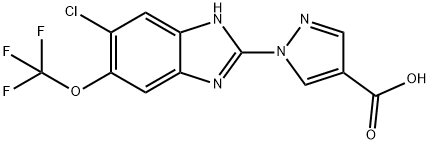
Hypoxia-inducible factor (HIF) prolyl hydroxylase (PHD) enzymes act as central gatekeepers of posttranscriptional and transcriptional adaptation to hypoxia, oxidative stress, and excitotoxicity. Their catalytic activity is dependent on iron, 2-oxoglutarate (2-OG), and oxygen, and leads to the stabilization of a host of proteins, including the hypoxia-inducible transcription factors in response to oxygen availability. Inhibitors of PHD have been used to mimic a hypoxic response in order to study a range of oxygen-deprivation-related disorders, including anemia, ulcerative colitis, myocardial ischemia, stroke, and metabolic disorders. JNJ-42041935 is a selective, 2-OG competitive, and reversible inhibitor of PHD enzymes (pKis = 7.91, 7.29, and 7.65 for PHD1, 2, and 3, respectively). It is >100-fold selective for PHD compared to the related FIH (factor-inhibiting HIF) and a panel of various other enzymes. In an inflammation-induced anemia model in rats, 100 μM/kg/day JNJ-42041935 significantly increased the number of circulating reticulocytes and red blood cells, increased blood hemoglobin and hematocrit, and restored mean corpuscular volume and mean cell hemoglobin of red bloods cells.[Cayman Chemical]
in vivo
JNJ-42041935 is used to compare the effect of selective inhibition of PHD to intermittent, high doses (50 μg/kg i.p.) of an exogenous erythropoietin receptor agonist in an inflammation induced anemia model in rats. JNJ-42041935 (100 μmol/kg, once a day for 14 days) is effective in reversing inflammation induced anemia, whereas erythropoietin has no effect. Administration of JNJ-42041935 (100 μmol/kg p.o.) for 5 consecutive days resulted in a 2-fold increase in reticulocytes, an increase in hemoglobin by 2.3 g/dl, and an increase in the hematocrit of 9%. Two hours after oral administration of 300 μmol/kg JNJ-42041935, the bioluminescence over the peritoneal area is increased by 2.2 ± 0.3-fold relative to luciferase-treated vehicle controls in the mouse [1].