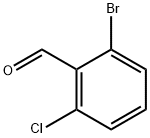
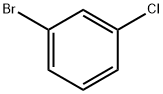
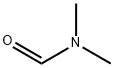
The general procedure for the synthesis of 2-chloro-6-bromobenzaldehyde from m-chlorobromobenzene and N,N-dimethylformamide was as follows: 1.6 moles of hexane solution (4.5 mL, 2.8 mmol) of butyllithium was added to a 3-liter triple-necked flask fitted with a stirrer, a dosing funnel, a cryogenic thermometer, and a nitrogen inlet tube under the protection of nitrogen, and the temperature of the reaction system was maintained at 0°C. The reaction was carried out in the following manner. Subsequently, anhydrous tetrahydrofuran solution of diisopropylamine (1.13 mL, 8.1 mmol) was added slowly and dropwise. The resulting mixture was stirred at 0 °C for 10 min and then cooled to -78 °C. At this temperature, an anhydrous tetrahydrofuran solution of m-bromochlorobenzene (1.4 g, 7.3 mmol) was added slowly and dropwise, and the reaction mixture was continued to be stirred at -78 °C for 1 hour. Next, anhydrous N,N-dimethylformamide (636 μL) was added. After the reaction solution was slowly warmed to room temperature, the reaction was quenched by the addition of acetic acid (50 mL) and water (50 mL). The aqueous phase was extracted with ether (2 x 50 mL) and the organic phases were combined. The organic phase was washed with dilute aqueous hydrochloric acid and saturated saline in turn, dried over anhydrous sodium sulfate, filtered and concentrated under reduced pressure. The crude product was purified by fast column chromatography on silica gel with the eluent of 9:1 hexane/ethyl acetate to afford 2-chloro-6-bromobenzaldehyde as an off-white solid (850 mg, 53% yield). The product was confirmed by NMR hydrogen spectrum (300 MHz, CDCl3): δ 10.4 (s, 1H), 7.6 (m, 1H), 7.45 (m, 1H), 7.3 (m, 1H).