P301+P312:IF SWALLOWED: call a POISON CENTER or doctor/physician IF you feel unwell.
P308+P313:IF exposed or concerned: Get medical advice/attention.
Description
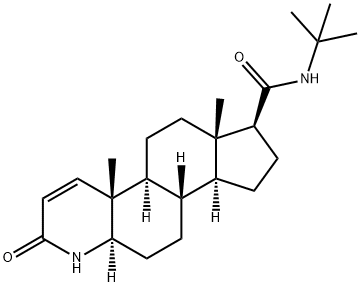
5α-Reductase catalyzes the NADPH-dependent reduction of Δ4,5 double bonds in several steroid substrates, including testosterone, which is converted to dihydrotestosterone, the primary mediator of prostate growth. The 5α-reductase enzymes responsible for the reduction of testosterone to dihydrotestosterone exists as two forms: type I, which occurs in the skin, liver, and ventral prostate and type II, which is expressed in ventral prostate, epididymis, and other reproductive tissues. Finasteride is a 4-azasteroid analog of testosterone that competitively blocks type II 5α-reductase activity (IC50 = 4.2 nM) with 100-fold greater affinity than for the type I enzyme. It has been used in the treatment of benign prostatic hyperplasia, decreasing human prostatic dihydrotestosterone levels by 70-90% and reducing prostatic size. However, at 10 μM finasteride has also been shown to induce the expression of Nrf2 and HO-1 proteins in androgen refractory prostrate PC-3 cells, which has been implicated in increased high-grade prostate tumor formation. Also, at 0.1 μM finasteride can inhibit testosterone-induced type I procollagen and TGF-β1 expression in human scalp dermal fibroblasts in a model of androgenic alopecia.