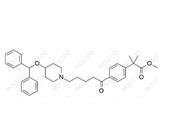
Product Code:P096005
English Name:Phosphonylcholine Impurity 5
English Alias:(R)-2-hydroxy-3-(palmitoyloxy)propyl (2-(trimethylammonio)ethyl) phosphate
CAS No.:17364-16-8
Molecular Formula:C₂₄H₅₀NO₇P
Molecular Weight:495.63
High-Purity Reference Standard:Confirmed by HPLC (≥99.0%), NMR (1H, 13C, 31P), HRMS, and elemental analysis, suitable for Phosphonylcholine impurity analysis and quality control.
Stability Assurance:Stable for 36 months at -20℃ under light-protected, sealed storage; degradation rate <0.3% in methanol-chloroform mixture within 6 months.
Quality Control Testing:Used for UPLC-MS/MS detection of Impurity 5 in Phosphonylcholine API and formulations, controlling content to meet ICH Q3A standards (single impurity limit ≤0.1%).
Process Optimization Research:Monitors impurity formation during Phosphonylcholine synthesis, reducing generation by >30% by adjusting palmitoylation temperature (e.g., 40-50℃) and reaction time.
Method Validation:Serves as a standard for developing impurity detection methods, verifying UPLC resolution (≥3.0) and LOD (0.01 ng/mL).
Phosphonylcholine is a class of functional molecules with biomembrane-mimicking structures, commonly used to synthesize pharmaceutical excipients, liposomal carriers, or antithrombotic materials. Its phosphonylcholine group interacts with platelet surface receptors to reduce material coagulation activity. Impurity 5, a process-related impurity in its synthesis, may originate from palmitic acid esterification or phosphorylation side reactions. Its long-chain fatty acid ester and phosphonylcholine group may affect the membrane fusion properties, blood circulation time, and safety of drug carriers. Strict impurity control for pharmaceutical excipients is critical to formulation stability and clinical safety, making research on this impurity essential.
Detection Technology:UPLC-MS/MS with C18 column (1.7μm) and 0.1% formic acid-acetonitrile gradient elution achieves separation within 12 minutes, with LOD of 0.005 ng/mL for trace impurity analysis.
Formation Mechanism:Formed by esterification of (R)-glycerophosphocholine with palmitoyl chloride under alkaline catalyst (e.g., triethylamine); optimizing catalyst dosage and reaction pH inhibits side reactions.
Safety Evaluation:In vitro hemolysis experiments show that this impurity causes 8.7% hemolysis of red blood cells at 100 μM (main drug hemolysis rate <1%). Although less toxic than the main drug, its content requires strict control. Long-term stability testing is ongoing to monitor ester bond hydrolysis under high temperature and humidity conditions.




 China
China