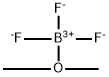
Boron trifluoride etherates:(compounded with methyl ether) is moisture-sensitive, corrosive, flammable liquid. Molecular weight=113.9;Boiling point=126-127℃; Freezing/Melting point 5214℃. Hazard Identification (based on NFPA-704 MRating System): (dimethyl etherate/UN 2965) Health 4,Flammability 4, Reactivity 1 .(compounded with ethyl ether) is a moisture-sensitive, corrosive, flammable liquid. Molecular weight=141.9;Boiling point=126℃; Freezing/Melting point=2 58℃;Flash point=64℃ (oc). Hazard Identification (based onNFPA-704 M Rating System) (methyl ether): Health 3,Flammability 3, Reactivity 1 . Decomposes in water.(methanol complex in excess methanol) HazardIdentification (based on NFPA-704 M Rating System):Health 3, Flammability 4, Reactivity 1.
Boron trifluoride etherates: (compounded with
methyl ether) is moisture-sensitive, corrosive, flammable liquid.
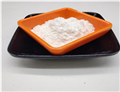
clear brownish liquid, fuming in moist air
Reactant or reagent involved in:
- Deconvoluting the chemical reaction kinetics of platinum-silver ligand exchange
- Synthesis of neurogenic ganglioside LLG-3 from starfish via glycosylation reactions
- Synthesis of peloruside via lactonization and relay ring-closing metathesis cyclization
- FRET for monitoring Pd-catalyzed nucleophilic allylic substitution reactions
- Single molecuel imaging of fluorophore-tagged palldium(II) complexes
- β-elimination and rearrangement reactions for synthesis of exocyclic vinyl ethers
A fuming liquid. Corrosive to skin, eyes and mucous membranes. May be toxic by inhalation. Used as a catalyst in chemical reactions.
Highly flammable. In moist air forms dense white pungent fumes, corrosive to skin, avoid inhalation [Merck 11th ed. 1989]. Upon exposure to water may emit flammable and corrosive vapors.
Boron trifluoride dimethyl etherate is a flammable, corrosive, and toxic liquid, moisture-sensitive. Emits toxic fluoride fumes when heated to decomposition [Lewis, 3rd ed., 1993, p. 189].
Boron trifluoride dimethyl etherate is highly toxic by inhalation.
Fire may produce irritating or poisonous gases. Flammable/combustible material which may be ignited by heat spark or flame. Vapors may travel to a source of ignition and flash back. Container may explode in heat of fire. Vapor explosion hazard indoors, outdoors, or in sewer. Runoff to sewer may create fire or explosion hazard. When heated to decomposition, Boron trifluoride dimethyl etherate emits toxic fumes of fluorides.
Flammability and Explosibility
Contact with water liberates highly flammable gases
core: boron
reagent type: Lewis acid
reagent type: catalyst
The raw material methyl ether liquid was pumped to the molecular sieve adsorption tower, and passed upward through the molecular sieve bed from the lower part of the molecular sieve adsorption tower with a residence time of 30 minutes. The adsorption process was carried out at 0.5MpaG and 0. After molecular sieve adsorption treatment, the water content in the refined methyl ether is reduced to 0.001%. The raw material boron trifluoride gas enters the low-temperature distillation tower, and the temperature at the top of the tower is controlled at -105C, and the pressure is controlled at O.1MpaG. After the distillation process, the refined boron trifluoride comes out from the top of the tower without hydrogen fluoride, silicon tetrafluoride and other impurities.
Refined methyl ether flows through the column tube of the complex reactor from the top to the bottom, and the refined boron trifluoride gas enters the column tube of the complex reactor from the bottom to the top, and the methyl ether and boron trifluoride undergo the complexation reaction on the packing of the column tube. The complexation reaction was controlled at 0.6 MPaG and the temperature was controlled at -10. The generated complex was pumped to the exchange reaction distillation column. The vacuum of the exchange reaction distillation column was 150 mmHg, the temperature at the top of the column was 85C, and the temperature of the kettle was 90C. Eventually, after the exchange reaction and distillation equilibrium were reached in the exchange distillation column, boron trifluoride-11 gas with more than 99% abundance was obtained from the top of the tower, and boron trifluoride methyl ether-10 isotope product with more than 95% abundance was obtained from the tower kettle.
If this chemical gets into the eyes, remove anycontact lenses at once and irrigate immediately for at least15 min, occasionally lifting upper and lower lids. Seek medical attention immediately. If this chemical contacts theskin, remove contaminated clothing and wash immediatelywith soap and water. Seek medical attention immediately. Ifthis chemical has been inhaled, remove from exposure,begin rescue breathing (using universal precautions, including resuscitation mask) if breathing has stopped and CPR ifheart action has stopped. Transfer promptly to a medicalfacility. When this chemical has been swallowed, get medical attention. If victim is conscious, administer water ormilk. Do not induce vomiting. Medical observation isrecommended for 24� 48 h after breathing overexposure, aspulmonary edema may be delayed. As first aid for pulmonaryedema,a doctor or authorized paramedic may consideradministering a corticosteroid spray.
Color Code—Red: Flammability Hazard: Storein a flammable liquid storage area or approved cabinetaway from ignition sources and corrosive and reactivematerials. Before entering confined space where thesechemicals may be present, check to make sure that anexplosive concentration does not exist. Store in tightlyclosed containers in a cool, well-ventilated area. Metalcontainers involving the transfer of this chemical shouldbe grounded and bonded. Where possible, automaticallypump liquid from drums or other storage containers toprocess containers. Drums must be equipped with selfclosing valves, pressure vacuum bungs, and flame arresters.Use only nonsparking tools and equipment, especiallywhen opening and closing containers of this chemical.Sources of ignition, such as smoking and open flames, areprohibited where this chemical is used, handled, or storedin a manner that could create a potential fire or explosionhazard.
Diethyl: UN2604 Boron trifluoride diethyl
etherate, Hazard class: 8; Labels: 8—Corrosive material,
3—Flammable liquid. Dimethyl: UN2965 Boron trifluoride
dimethyl etherate, Hazard class: 4.3; Labels: 4.3—
Dangerous when wet, 8—Corrosive material, 3—
Flammable liquid.
Reacts with air forming corrosive hydrogen
fluoride vapors. Incompatible with oxidizers (may
cause fire and explosion), water, steam or heat, forming
corrosive and flammable vapors. Peroxide containing etherate
reacts explosively with aluminum lithium hydride,
magnesium tetrahydroaluminate. Mixtures with phenol
react explosively with 1,3-butadiene. Presumed to form
explosive peroxides.