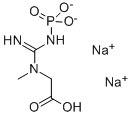
Non-salt form:
Phosphocreatine (200 mg/kg, i.p., once every other day, 7 weeks) not only alleviates oxidative stress and myocardial apoptosis, but also rescues myocardial necroptosis in DOX-induced cardiotoxicity of rat[2].
Phosphocreatine (20-40 mg/kg, i.v., daily, 6 weeks) has a protective effect on the kidney tissues against diabetic nephropathy in SD (Sprague Dawley) rats[4].
| Animal Model: | Male Sprague Dawley (SD) rats, i.p., normal saline, 3 times; i.p., DOX 2 mg/kg, 7 times; i.p., normal saline, 3 times [2] |
| Dosage: | 200 mg/kg |
| Administration: | i.p., once every other day, 7 weeks |
| Result: | Improved the heart function abnormality.
Lowered myocardial apoptosis.
Recovered the expression of Nrf2, SOD, FoxO3a and diminished C-Casp3, Bax/Bcl2 in the myocardial tissue of rats.
Markedly improved myocardial necroptosis, as indicated by decreasing expression of RIP3 and CaMKII.
Increased expression level of TAK1.
|
| Animal Model: | Male Sprague Dawley (SD) rats, i.p., 70 mg/kg (STZ(Streptozotocin) (HY-13753)), daily, 6 weeks [4] |
| Dosage: | 20, 40 mg/kg |
| Administration: | i.p., daily, 6 weeks |
| Result: | Reduced hyperglycemia compared with STZ (Streptozotocin) (HY-13753) -treated rats.
Increased the weight of rats gradually compared with STZ (Streptozotocin) (HY-13753) group.
Decreased kidney weight index (kidney weight/body weight).
Decreased MDA level and increased of GSH and SOD levels compared with STZ group.
Decreased the apoptotic rate compared with MGO-treated groups.
|