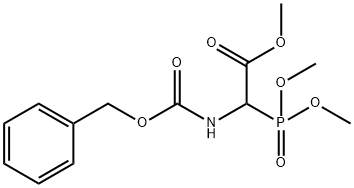
A-phosphonoylglycine trimethyl ester was added to a round-bottom flask, and a 10% sodium carbonate aqueous solution was added and stirred to dissolve it. Then dioxane was added, and a 10% solution of 9-fluorenylmethoxycarbonyl chloride dioxane was slowly added dropwise to the reaction solution under ice bath conditions. After the addition was completed, the reaction was carried out in an ice bath for 2 hours, and then at room temperature for 8 hours. The solution was diluted with water and extracted 4 times with diethyl ether. The aqueous layer was placed in an ice bath, and the pH was adjusted with concentrated hydrochloric acid until Congo red paper turned blue. The solution was placed in a refrigerator overnight, and a white precipitate was obtained. The precipitate was extracted with ethyl acetate, and the combined organic liquids were washed with water. The organic layer was dried with anhydrous magnesium sulfate and then dried under vacuum to obtain (+/-)-BENZYLOXYCARBONYL-ALPHA-PHOSPHONOGLYCINE TRIMETHYL ESTER.
(+/-)-Benzyloxycarbonyl-alpha-phosphonoglycine trimethyl ester is an important organic compound with the appearance of white to off-white powder to crystals, melting point of 78.0~ 82.0 °C, soluble in methanol, irritating to the eyes and skin, store in a cool, dry place in a closed Keep away from strong oxidising agents. Keep away from strong oxidising agents. It is mainly used in chemical industry and experimental research.
Z-α-Phosphonoglycine is used in the synthesis of calcitonin gene-related peptide antagonists. Also used in the synthesis of dehydroamino acid esters for amino acid and peptide research.
Starting material for the synthesis of (Z)-dehydroamino acids by Wittig-Horner reaction with aldehydes; the dehydroamino acids can be stereoselectively reduced to amino acids
reaction type: solution phase peptide synthesis