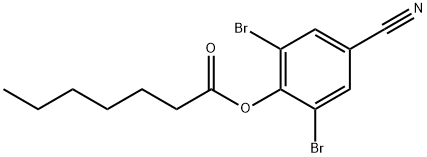
A widely used herbicide for post-emergence control. It has a low aqueous solubility and a low volatility. There is a low potential for leaching to groundwater based on its chemical properties. It is not expected to be persistent in soil or water systems. It is moderately toxic via the oral route to mammals, is an endocrine disrupting chemical and a skin sensitiser. It is highly toxic to fish but less so to other aquatic and terrestrial biodiversity.
Bromoxynil-heptanoate is commercially synthesised by esterifying bromoxynil (2,6-dibromo-4-cyanophenol) with heptanoic acid. The production process begins with the preparation of bromoxynil, which involves bromination of 4-cyanophenol to introduce the dibromo substituents. This intermediate is then reacted with heptanoic acid (or its acid chloride) in the presence of a catalyst, typically a base or acid catalyst, to form the heptanoate ester. The reaction is conducted under controlled temperature and solvent conditions to maximise yield and minimise side reactions.