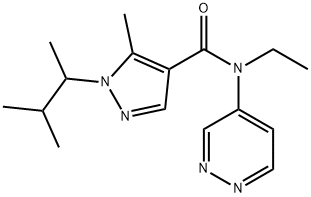
Dimpropyridaz is manufactured through a modular heterocycle-assembly route typical of modern pyridazinone insecticides. Producers began by constructing the substituted pyridazinone core, usually via condensation of a di-carbonyl precursor with hydrazine derivatives, under conditions that controlled ring closure and avoided over-reaction of the sensitive heterocycle. In parallel, the chlorinated and fluorinated aromatic fragment that defines dimpropyridaz’s potency was prepared using established electrophilic substitution and halogen-management chemistry. These two advanced intermediates were then joined through a selective N-alkylation or related heteroaryl coupling step that installed the aromatic moiety onto the pyridazinone scaffold without degrading the halogenated ring.