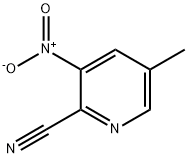
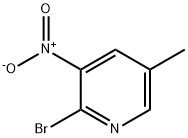
2-Bromo-5-methyl-3-nitropyridine (60.53 g, 278.9 mmol) and cuprous cyanide (CuCN, 27.52 g, 307.3 mmol) were added to a round bottom flask. The flask was evacuated and displaced three times with nitrogen to remove air. N,N-dimethylformamide (DMF, 150 mL) was added slowly through a constant pressure dropping funnel. The reaction mixture was heated to 70 °C and kept stirring for 1.5 hours. Upon completion of the reaction, the mixture was cooled to room temperature and subsequently poured into a mixture of ethyl acetate (EtOAc, 500 mL) and water (250 mL). The mixture was filtered through a bed of diatomaceous earth (1 cm thickness) to remove insoluble impurities. The organic and aqueous phases were separated, and the organic phase was washed sequentially with deionized water (2 × 100 mL) and 1:1 saturated ammonium chloride/ammonia solution (2 × 100 mL). The aqueous phases were combined and back-extracted with ethyl acetate (2 × 200 mL). All organic phases were combined, dried with anhydrous magnesium sulfate (MgSO4), filtered and concentrated under reduced pressure to afford the target product 5-methyl-3-nitropyridine-2-carbonitrile (36.10 g, 79% yield).