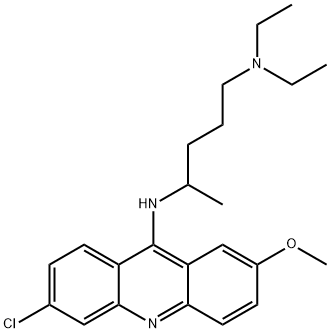
Quinacrine is an acridine that was used extensively from the mid-1920s to the end of World War II. It acts much like chloroquine and is reasonably effective. Because it causes the skin to turn yellow and, in high doses, causes yellow vision, the drug is no longer in use as an antimalarial.
anthelmintic, antimalarial, intercalating agent
ChEBI: A member of the class of acridines that is acridine substituted by a chloro group at position 6, a methoxy group at position 2 and a [5-(diethylamino)pentan-2-yl]nitrilo group at position 9.
Poison by intravenous
and subcutaneous routes. Moderately toxic
by ingestion. Mutation data reported.
Experimental reproductive effects. Has been
implicated in aplas tic anemia. When heated
to decomposition, it emits very toxic fumes
of Cland NOx.
Quinacrine (3-30 mg/kg, i.p., once daily for three days) has protective effect against glycerol-induced acute kidney injury in rats[5].
Quinacrine (2.5-10 mg/kg, i.p., once daily for eight weeks) has protective effect against Cyclosporine-induced nephrotoxicity in rats[6].
| Animal Model: | Acute kidney injury rat model[5] |
| Dosage: | 3-30 mg/kg |
| Administration: | i.p. |
| Result: | Attenuated glycerol induced structural and functional changes in kidney. |