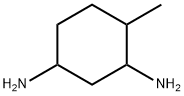
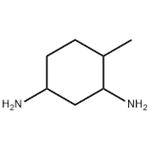
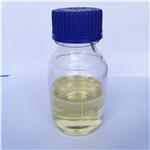
4-Methylcyclohexane-1,3-diamine (HTDA) is an important organic compound primarily used in the production of high-end epoxy resin curing agents, which impart excellent mechanical properties, corrosion resistance and heat resistance to epoxy resins. It can also be used in the synthesis of polyamide resins. In the pharmaceutical and chemical industries, it serves as a key intermediate in the synthesis of various drugs, including antibacterial and antihistamine agents, and can also be used to construct bioactive molecules to support biomedical research. In the field of surfactants, it can be used to prepare cationic surfactants with emulsifying and bactericidal properties, as well as amphoteric surfactants that are biocompatible and low-irritant. It also has widespread applications in industries such as detergents and cosmetics.
4-Methylcyclohexane-1,3-diamine can be prepared by the catalytic hydrogenation of 2,4-dinitrotoluene (2,4-DNT). The catalyst used is a ruthenium-based catalyst. The conversion of DNT is 100% in all cases, and the selectivity for HTDA reaches 92.20%.
4-Methylcyclohexane-1,3-diamine is irritating and corrosive to the human body. Contact may cause severe skin burns and eye damage. Harmful if swallowed.