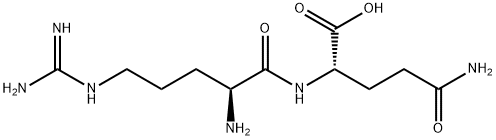
Arginyl-Glutamine is a dipeptide that can decrease VEGF levels and inhibit retinal neovascularization in a mouse model of oxygen-induced retinopathy[1].
Definition
ChEBI: Arg-Gln is a dipeptide formed from L-arginyl and L-glutamine residues. It has a role as a metabolite.
in vivo
Arginyl-Glutamine (1-5 g/kg/day as a hydrochloride salt; i.p.; twice daily) dramatically inhibits retinal neovascularization in the mouse oxygen-induced retinopathy (OIR) model[1].
Significantly decreased preretinal nuclei. Reduced neovascular tufts and vascular leakage in retinal vessels. Reduced preretinal neovascularization by 82% ± 7% and reduced VEGF mRNA by 64% ± 9% at 5 g/kg per day.
References
[1] Neu J, et al. The dipeptide Arg-Gln inhibits retinal neovascularization in the mouse model of oxygen-induced retinopathy. Invest Ophthalmol Vis Sci. 2006 Jul;47(7):3151-5. DOI:10.1167/iovs.05-1473