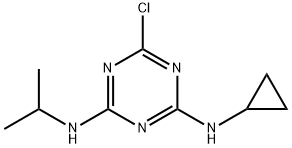
Cyprazine is a obsolete post-emergence herbicide. It has a low aqueous solubility and may be quite persistent in the environment depending on local conditions. Ecotoxicological data is scarce, however cyprazine is moderately toxic to fish. Little information is available regarding its human toxicology.
Cyprazine is an herbicide used in the protection of crops through the destruction and removal of weeds. Found in runoff and aquatic environments.
Cyprazine would have been manufactured using the same industrial chemical processess applied to other chloro substituted s triazine herbicides. Commercial production began with cyanuric chloride, the universal starting material for triazine pesticides, which was reacted stepwise with cyclopropylamine and isopropylamine, the two amines that define cyprazine’s substitution pattern. Each substitution step required careful temperature control because cyanuric chloride reacts exothermically and becomes progressively less reactive after each amine addition. After the final amination, the reaction mixture was neutralised, filtered, and subjected to solvent exchange and crystallisation to yield technical grade cyprazine.
Inhibition of plant photosynthesis - blocks the Hill Reaction step