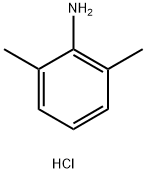
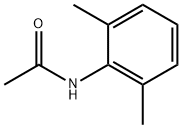
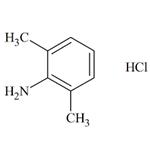
The general procedure for the synthesis of 2,6-dimethylaniline hydrochloride from 2,6-dimethylacetanilide and ethylmagnesium bromide was as follows: trifluoromethanesulfonic anhydride (Tf2O, 185 μL, 1.1 mmol) was added slowly and dropwise to a cooled-to-0°C dichloromethane ( 4 mL) solution. The reaction mixture was stirred at 0 °C for 30 min, then transferred to -78 °C and a solution of tetrahydrofuran (THF, 15 mL) of freshly prepared organocerium reagent/complex (3.0 mmol) was added, and stirring was continued for 2 hours. Upon completion of the reaction, the reaction was quenched by the addition of a 3 mol/L aqueous hydrochloric acid solution (5 mL) and the mixture was gradually warmed to room temperature with continued stirring for 2 hours. Subsequently, 25% ammonium hydroxide solution (5 mL) was added to the mixture. The organic layer was separated and the aqueous phase was extracted with ether (3 x 10 mL). The organic layers were combined, washed with saturated saline (3 x 3 mL) and concentrated under reduced pressure to about 1/3 of the original volume. the residual organic phase was extracted with 3 mol/L aqueous hydrochloric acid solution (3 x 5 mL). The separated organic phase was washed with saturated saline (5 mL), dried with anhydrous magnesium sulfate (MgSO4), filtered and concentrated under reduced pressure, and the residue was purified by silica gel fast column chromatography to obtain the target ketone product. All aqueous phases were combined, washed with ether (5 mL) and alkalized with 25% ammonium hydroxide solution (5 mL), then back-extracted with ether (5×20 mL). The ether layers were combined, washed with saturated saline (5 mL), dried over anhydrous magnesium sulfate (MgSO4), filtered and acidified with 3 mol/L ethyl acetate hydrochloride solution (5 mL), and finally concentrated under reduced pressure to give 2,6-dimethylaniline hydrochloride.