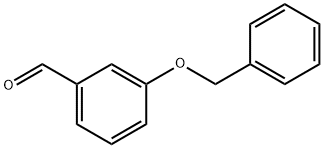
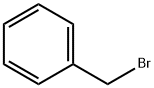
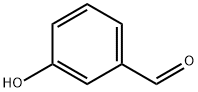
The general procedure for the synthesis of 3-(benzyloxy)benzaldehyde from benzyl bromide and m-hydroxybenzaldehyde was as follows: m-hydroxybenzaldehyde (3 g, 24.6 mmol) and anhydrous potassium carbonate (10.2 g, 73.8 mmol) were suspended in N,N-dimethylformamide (60 mL). Benzyl bromide (3.21 mL, 27.1 mmol) was added dropwise to this suspension and the reaction was stirred at room temperature for 14 hours. Upon completion of the reaction, the reaction mixture was poured into a mixture of ethyl acetate and water for liquid-liquid partitioning. The organic phase was separated, washed three times with water, the organic phase was dried with anhydrous magnesium sulfate, and the desiccant was removed by filtration. The filtrate was concentrated under reduced pressure and the resulting crude product was purified by silica gel column chromatography with an eluent ratio of heptane:ethyl acetate (4:1 to 1:1 gradient elution) to afford the target compound 3-(benzyloxy)benzaldehyde (5.16 g, 99% yield). The product was characterized by 1H-NMR (CDCl3) with the following chemical shift δ (ppm): 5.13 (2H, s, -OCH2-), 7.24-7.25 (1H, m, aryl ring H), 7.35-7.49 (8H, m, aryl ring H), 9.98 (1H, s, -CHO).