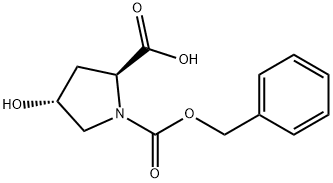
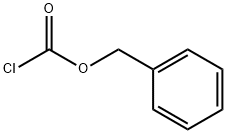
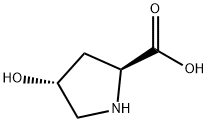
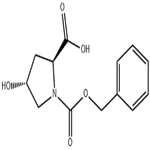
GENERAL METHOD: To a solution of L-hydroxyproline (78.7 g, 600 mmol) and sodium bicarbonate (126 g, 1.5 mol) in water (900 mL), a solution of benzyl chloroformate (89.6 mL, 630 mmol) in dioxane (90 mL) was slowly added. The reaction mixture was stirred overnight at room temperature. Upon completion of the reaction (monitored by thin-layer chromatography), the reaction mixture was cooled to 0 °C in an ice bath and acidified to pH 2 with 12 M hydrochloric acid (about 75 mL was required). Subsequently, the aqueous phase was extracted with ethyl acetate (3 × 500 mL), the organic phases were combined and washed with saturated brine (3 × 200 mL), dried over anhydrous sodium sulfate, and concentrated under reduced pressure to give a colorless viscous oil. The yield was quantitative, and the product could be directly used in the next reaction without further purification.
[1] Bioorganic and Medicinal Chemistry Letters, 2000, vol. 10, # 16, p. 1845 - 1847
[2] Angewandte Chemie - International Edition, 2007, vol. 46, # 47, p. 9073 - 9077
[3] Patent: EP1193270, 2002, A2. Location in patent: Page 14, 35-36, 105
[4] Tetrahedron Letters, 2016, vol. 57, # 44, p. 4882 - 4884
[5] Chemical and Pharmaceutical Bulletin, 2018, vol. 66, # 5, p. 575 - 580