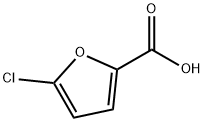
Example 7: Synthesis of N-(5-chlorofuran-2-ylcarbonyl)-3,7-diazabicyclo[3.3.0]octane trifluoroacetate
Step 1: Preparation of 3,7-diazabicyclo[3.3.0]octane
A solution of silver nitrate (8.0 g, 47 mmol) in water (20 mL) was added to 80 mL of 10% aqueous sodium hydroxide and stirred to form a suspension. A 30% aqueous ammonium hydroxide solution was added slowly until the suspension became clear.
Step 2: Coupling reaction
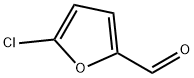
To the above clarified solution was added a methanol (5mL) solution of 5-chlorofuran-2-carbaldehyde (3.0g, 23mmol, Aldrich Chemical) and stirred for 30 minutes at room temperature.
Step 3: Post-treatment
The reaction mixture was filtered and the filtrate was washed with ether (100 mL). Subsequently, the aqueous filtrate was adjusted with cold 20% sulfuric acid to a pH of about 3. The acidic aqueous phase was extracted with ethyl acetate (3 x 100 mL). The organic phases were combined, washed with saturated aqueous sodium chloride (100 mL), dried over anhydrous sodium sulfate, and concentrated under reduced pressure to give 3.2 g (95% yield) of a white solid product with a melting point of 178-179 °C. The product was extracted with ethyl acetate (3 x 100 mL).
Remarks: The synthesis method is easy to scale up and has been successfully carried out in several experiments with scale over 10g.