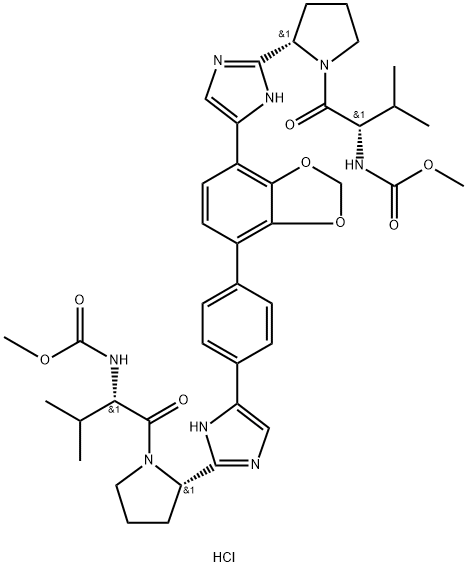
Catechol reacted with iodomethane under alkaline conditions to form acetal 18. Acetal 18 reacted with boronic acid 19 to form biphenyl 20 via Suzuki coupling. Biphenyl 20 was saponified (hydrolysis) and then chlorinated to form the acid chloride. The acid chloride was converted to the bis-acyl chloride via a modified Nierenstein reaction (chlorination promoted by phosphorus or arsenic reagents). The bis-α-haloketone was reacted with hydrogen bromide in aqueous solution to give the dibromide 23. The dibromide 23 was coupled with dipeptide 24 to form the bis-carbonate 25. The bis-carbonate 25 was reacted with ammonium acetate in refluxing toluene to construct two imidazole rings and to give the free base 26 of coblopasvir, albeit in low yield. Through extensive screening of salt formation conditions, methanol was identified as the best solvent to form a suitable solid form of the drug. The free base 26 was treated with hydrochloric acid in methanol at 60-65°C to afford coblopasvir hydrochloride (III) in yields ranging from 65-86%.