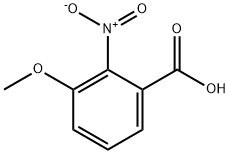
Dissolve 100 mL of water and an appropriate amount of NaOH, then add 6.9 g (50 mmol) of 3-methyl-2-nitrophenol. Heat to a certain temperature, then slowly add dimethyl sulfate dropwise for about 1 hour. Monitor the reaction with TLC until p-hydroxybenzoic acid reacts completely. Cool to room temperature and adjust the pH to approximately 1. When a large amount of white solid precipitates, filter, wash three times with deionized water, dry, and weigh.
The experiment uses a batch reaction method, and the system is a gas-liquid two-phase catalytic system. A quartz glass oxidation vessel is used as the reaction apparatus, air as the oxidant, and cobalt naphthenate as the catalyst. Before the reaction begins, 3-methoxy-2-nitrotoluene and the catalyst are evenly added to the reaction vessel, and the vessel is tightened, all valves are closed, and a pressure test is performed. An appropriate amount of nitrogen is introduced into the reaction vessel, and the valves are closed, displaying a certain pressure value. Wait half an hour and observe whether the pressure gauge reading decreases. If the container is sealed, release the gas and begin heating, while gradually increasing the stirring rate of the oxidation vessel.
After the set reaction conditions are met, air is introduced into the oxidation reactor at a set flow rate. To prevent the liquid from evaporating and being carried away by the air, a reflux condenser is installed externally. To maintain temperature stability, a heating mantle is used to regulate the temperature outside the quartz glass stirred reactor. At the end of the reaction, the liquid is discharged through the lower outlet of the quartz glass oxidation reactor. After the reaction liquid cools, the middle portion is collected for analysis. The target compound, 3-methoxy-2-nitrobenzoic acid, is obtained.