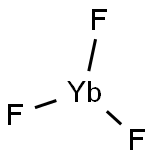
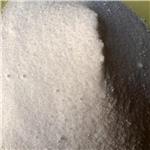
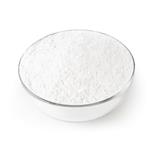
Ytterbium Fluoride is applied to numerous fiber amplifier and fiber optic technologies, High purity grades are widely applied as a doping agent for garnet crystals in lasers a important colourant in glasses and porcelain enamel glazes. Ytterbium Fluoride is a water insoluble Ytterbium source for use in oxygen-sensitive applications, such as metal production.
Ytterbium fluoride is synthesized in three steps. Step 1, Synthesis: High-purity hydrofluoric acid is diluted to 35%. An ytterbium carbonate filter cake is stirred into a paste, warmed, and slowly added to the hydrofluoric acid for synthesis, controlling the endpoint pH. Step 2, Driving off carbon dioxide: The precipitate is mixed with water into a paste, heated and held to completely drive off CO2, adjusting pH during this period. Step 3, Roasting: The material after CO2 removal is pressure-filtered and washed until ions meet standards, then pressed dry. The filter cake is placed in a crucible and roasted with gradient temperature increases (stages at 115C, 480C, 660C, and 785C) to yield the final product.