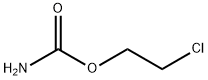
Using chloroethanol and a carbamylated reagent as raw materials, 2-chloroethylcarbamate is produced in a one-step reaction in the presence of a catalyst. The specific process is as follows:
In a 1000ml four-necked round-bottom flask equipped with a reflux condenser and an electric stirrer, 563.5g (7mol) of chloroethanol is added, the stirring is started, and the temperature is raised. When the temperature reaches 90℃, 307.5g of urea nitrate (2.5mol) and 172.5g of sodium nitrite (1mol) are added. The reaction is carried out between 80-125℃ for 4 hours. Excess chloroethanol is distilled off, and 500ml of diethyl ether is added to the residue. After thorough stirring, the mixture is filtered, and the diethyl ether is distilled off. 2-chloroethylcarbamate is then distilled off under reduced pressure, yielding 90g, with a yield of 30%.