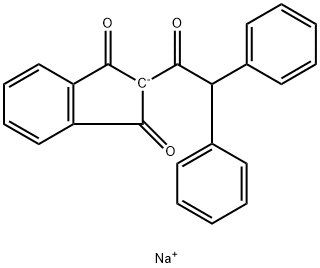
Diphacinone sodium was produced commercially by first synthesising the parent anticoagulant diphacinone, then converting it into its more water-soluble sodium salt. Industrial manufacture of diphacinone itself followed the classical coumarin-type rodenticide route: building the indandione framework through condensation of appropriately substituted benzyl and diketone precursors, followed by cyclisation and purification to remove tarry by-products typical of indandione chemistry. Once technical-grade diphacinone was obtained, producers neutralised its weakly acidic enolic hydroxyl group with sodium hydroxide or sodium carbonate in aqueous or hydroalcoholic media, carefully controlling temperature to avoid degradation of the sensitive indandione core.