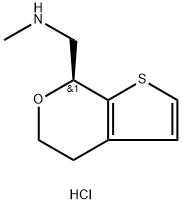
SEP-856 (0.3, 1 and 10 mg/kg, i.p.) hydrochloride is CNS active and exhibits a behavioral signature similar to known antipsychotic drugs[1].
SEP-856 (0.3, 1 and 10 mg/kg, orally once) hydrochloride significantly reduces PCP-induced hyperactivity[1].
Oral SEP-856 hydrochloride administration (1, 3 and 10 mg/kg) produces a dosedependent decrease in REM sleep, increase in latency to REM sleep and increase in cumulative wake (W) time[1].
| Animal Model: | Acute treatment with phencyclidine (PCP), which induces robust hyperactivity in rodents[1]. |
| Dosage: | 0.3, 1 and 3 mg/kg. |
| Administration: | Orally once. |
| Result: | Resulted in a dose-dependent inhibition of PCP-induced hyperactivity responses in C57Bl/6J mice (1-way ANOVA F (5, 59) = 18.96, p < 0.0001; Tukey’s post-hoc test, p < 0.05) with a 50% effective dose (ED50) of approximately 0.3 mg/kg. |
| Animal Model: | Male Sprague Dawley rats[1]. |
| Dosage: | 1, 2, and 5 mg/kg. |
| Administration: | I.V. injection. (Pharmacokinetic Analysis). |
| Result: | Rapidly absorbed with maximum plasma and brain concentrations reached within 0.25 to 0.5 hours in mice and rats and maximum plasma concentrations reached within 6 ± 2.83 hours in monkeys.
Penetrated mouse and rat brains after oral administration (10 mg/kg), with average brain-to-plasma AUC ratios of ~3 respectively.
|