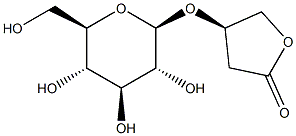
Synthesis of Kinsenoside by Chemical Method: To date, there are three chemical methods for synthesizing Kinsenoside: (1) Using 1,2,4-butanetriol as a raw material, selectively protecting the two hydroxyl groups at the 1 and 4 positions as aglycones, and performing a glycosylation reaction with glucose trichloroacetylimide ester protected by benzoyl groups at the 2, 3, 4, and 6 hydroxyl groups. After removing the protection on the hydroxyl groups, a lactone is synthesized by ring cyclization. After resolving the epimers and separating the α-glycoside and β-glycoside, Kinsenoside is obtained. (2) Using furfural as a raw material, 5-(R)-(1-oxy)-2(5H)-furanone is used as a key intermediate to synthesize 3-R-hydroxy-γ-butane lactone as aglycone. Glycosylation reaction is performed with glucose trichloroacetylimide ester protected by benzyl groups at the 2, 3, 4, and 6 hydroxyl groups. Finally, the benzyl group is removed to obtain the target product. (3) Using D-malic acid as a raw material, 3-(R)-hydroxy-&gamma--butyrolactone was synthesized as the aglycone, and then glycosylated with 2,3,4,6-tetrabenzylglucose trichloroacetylimide to remove the benzyl group, yielding the target product. A significant problem with the chemical synthesis of Anoectochilus roxburghii glycosides is that the yields of both the glycosylation and deprotection reactions are relatively low; the α and β configurations of the glycosides obtained from the glycosylation reaction are very difficult to separate due to their similar configurations. A combination of chemical and enzymatic methods was used to synthesize Anoectochilus roxburghii glycosides: 3-R-hydroxy-&gamma--butyrolactone was synthesized from D-malic acid as a raw material, and then reacted with β-D-glucose in a reverse hydrolysis reaction catalyzed by amygdalinase to form Anoectochilus roxburghii glycosides. This method eliminates the need for protection and deprotection of the sugar donor, simplifying the reaction process; it improves the efficiency of the glycosylation reaction, with a Anoectochilus roxburghii glycoside yield as high as 17%; and after glycosylation, a single β configuration glycoside is formed. Because temperature has a significant impact on the activity of β-D-glucosidase, an unsuitable amount of enzyme can easily lead to the hydrolysis of the product, so the reaction conditions need to be strictly controlled.
Kinsenoside is a glycoside originally isolated from A. formosanus that has diverse biological activities, including antihyperlipidemic, immunosuppressive, and anti-inflammatory properties. It increases lipolysis mediated by adipose triglyceride lipase and increases hydrolysis of triglycerides in C3H10T1/2 adipocytes. It also increases phosphorylation of peroxisome proliferator-activated receptor α (PPARα) and CREB as well as protein levels of SIRT1, PGC-1α, and carnitine palmitoyltransferase I. Kinsenoside downregulates the expression and phosphorylation of VEGF receptor 2 (VEGFR2) and inhibits crosstalk between the JAK2/STAT3 and PI3K/AKT signaling pathways in dendritic cells in vitro. It decreases the production of IFN-γ, IL-17, and TNF-α and increases the production of IL-10 in splenocytes isolated from mice with collagen-induced arthritis (CIA). Kinsenoside (300 mg/kg per day) decreases the expression of IL-1β, TNF-α, and matrix metalloproteinase-9 (MMP-9) and increases the expression of IL-10 in inflamed joints in a mouse model of collagen-induced arthritis and prevents paw edema and reduces the severity of arthritis.
[1] X M DU. Glycosidic constituents from in vitro Anoectochilus formosanus.[J]. Chemical & pharmaceutical bulletin, 2000, 48 11: 1803-1804. DOI:
10.1248/cpb.48.1803[2] De Souza, F.I., Zumiotti, A.V., and Da Silva, C.F. Neuregulins 1-α and 1-β on the regeneration the peripheral nerves[J]. Acta Ortop Bras.
[3] HUNG-BO HSIAO. Kinsenoside inhibits the inflammatory mediator release in a type-II collagen induced arthritis mouse model by regulating the T cells responses[J]. BMC Complementary and Alternative Medicine, 2016, 16 1. DOI:
10.1186/s12906-016-1054-8[4] MING XIANG. Effects of kinsenoside, a potential immunosuppressive drug for autoimmune hepatitis, on dendritic cells/CD8+T cells communication in mice[J]. Hepatology, 2016, 64 6: 2135-2150. DOI:
10.1002/hep.28825