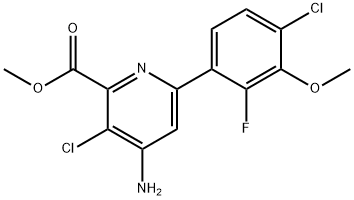
Halauxifen-methyl is synthesised through a multi-step process that typically begins with 2-chloro-6-fluoroanisole as the starting material. This compound undergoes metallation and borylation to form a boronic acid intermediate. A Suzuki cross-coupling reaction is then performed with a complementary aryl halide to construct the biaryl system central to Halauxifen’s structure. Following this, deprotection steps are applied to remove protecting groups and yield the final active compound. The methyl ester form is often used in formulations and is cleaved in plants to release the active carboxylate.
ChEBI: Halauxifen-methyl is a methyl ester resulting from the formal condensation of the carboxy group of halauxifen with methanol. It is a proherbicide used for the control of broad-leaved weeds in cereals and oilseed rape. It has a role as a synthetic auxin and a proherbicide. It is a member of monofluorobenzenes, a member of monochlorobenzenes, a monomethoxybenzene, an aminopyridine, a methyl ester, a chloropyridine and a biaryl. It is functionally related to a halauxifen.