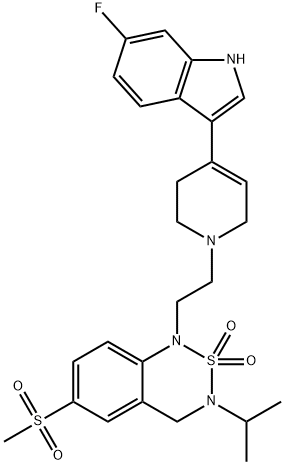
LY393558 (1-20 mg/kg; p.o., single) raises extracellular levels of 5-HT to 200-250% at 1 mg/kg in guinea pigs model, while levels of 5-HT to approximately 1500% at the highest dose 20 mg/kg[1].
LY393558 (20 mg/kg; p.o., single) completely abolishes the reduction of levels of 5-HT induced by tetrodotoxin (1μM) in guinea pigs model[1].
LY393558 (1-20 mg/kg; p.o., single) significantly increases extracellular levels of 5-HT in rats model[1].
LY393558 (5 mg/kg/day; p.o., 21 days) can still elicit a further increase in extracellular 5-HT in chronic treatment[1].
| Animal Model: | Female Dunkin Hartley guinea pigs (350-400 g)[1] |
| Dosage: | 1-20 mg/kg |
| Administration: | p.o., single |
| Result: | Extracellular levels of 5-HT reached 200-250% at 1 mg/kg, while levels of 5-HT reached approximately 1500% at the highest dose 20 mg/kg. |
| Animal Model: | Female Dunkin Hartley guinea pigs (350-400 g)[1] |
| Dosage: | 20 mg/kg |
| Administration: | p.o., single |
| Result: | Completely abolished the reduction of levels of 5-HT induced by tetrodotoxin (1μM). |
| Animal Model: | Male Lister Hooded rats (290-320 g)[1] |
| Dosage: | 1-20 mg/kg |
| Administration: | p.o., single |
| Result: | Significantly increased extracellular levels of 5-HT. |
| Animal Model: | Male Lister Hooded rats (290-320 g)[1] |
| Dosage: | 5 mg/kg/day |
| Administration: | p.o., 21 days |
| Result: | Still elicited a further increase in extracellular 5-HT in chronic treatment. |