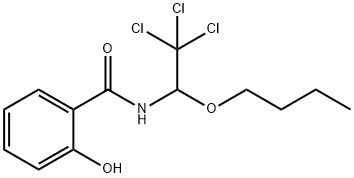
Trichlamide is commercially synthesised through a process that begins with the preparation of salicylamide, which is reacted with 1-butoxy-2,2,2-trichloroethyl chloride under basic conditions, typically using a non-aqueous solvent like dichloromethane and a base such as triethylamine. This nucleophilic substitution yields trichlamide, a compound characterised by its trichlorinated aliphatic side chain and phenolic benzamide core. The reaction is conducted under controlled temperature to ensure selectivity and minimise side reactions.