Originator
Desoxyn ,Abbott Laboratories
Definition
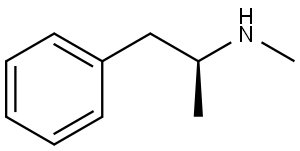
ChEBI: A member of the class of amphetamines in which the amino group of (S)-amphetamine carries a methyl substituent.
Manufacturing Process
2 Methods of prepearing of methamphetamine:
1. (-)-Ephedrin was reduced by hydrogenesation with hydrogen in the presence of Pt-C catalyst to give the (+)-N-α-dimethylphenethylamine (methamphetamine), melting point 172°-174°C.
2. Methamphetamine was obtained by the methylation of
phenylisopropylamine.
To give methamphetamine hydrochloride the base methamphetamine was
treated by eqimolar quantity of hydrochloric acid.
brand name
Amone;Desoxyn;Dexophrine;Dexoval;Doxyfed;Doxyn
Drinalfa;Efroxine;Euphrodinal;Gardstat;Gerobit;Geronyl;Lemobese;Madrine;Mediatric;Meloda;Metamsustac;Methampex;Methedrinal;Neodrine-triple;Obedrin-la;Obelones;Obe-slim;Pervitin;Phedrisox;Phelantin;Philopon;Soxympamine;Syndrox;Tonedron;Uno.
Therapeutic Function
Sympathomimetic, Central stimulant
World Health Organization (WHO)
Metamfetamine, an amfetamine derivative, is controlled under
Schedule II of the 1971 Convention on Psychotropic Substances. See WHO
comment for amfetamine.
(Reference: (UNCPS2) United Nations Convention on Psychotropic Substances (II),
, , 1971)