Synthesis
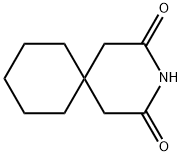
The synthesis of BL-1743 started with 3,3-cyclopentane glutarimide, which was first subjected to a reductive reaction with lithium aluminum hydride (LiAlH4) in tetrahydrofuran (THF) under refluxing conditions to afford 3-azaspiro[5,5]undecane hydrochloride (9), which was followed by treatment with HCl/ethyl ether to obtain the target product in 75% yield (see Scheme 1). Next, model compound BL-1743 was prepared by nucleophilic substitution of compound 9 by 2-methylthio-2-imidazoline.In addition, compound 9 was subjected to reductive amination with different aldehydes in dichloroethane using sodium triacetoxyborohydride (NaBH(OAc)3) and formic acid (HCO2H) as reducing agents to afford derivatives 1-8 in yields ranging from 65% to 95%. The results of activity tests showed that the inhibitory activity of BL-1743 was completely lost at 100 μM concentration after the imidazoline ring was replaced by a hydrophobic substituent or a heterocyclic ring that lacked a hydrogen bond donor (HBD), and the AM2 activity remained >90%. In contrast, inhibitors 7 and 8 containing an imidazole head group showed moderate inhibitory activity, suggesting that the presence of a hydrogen bond donor may be a structural feature necessary for inhibitory activity.

![3-azaspiro[5.5]undecane hydrochloride Structure](https://www.chemicalbook.com/CAS/GIF/1125-01-5.gif)
![3-azaspiro[5.5]undecane hydrochloride](/CAS/GIF/1125-01-5.gif)