Synthesis
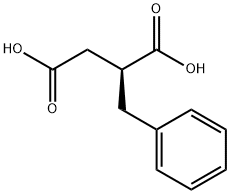
The conventional synthetic method for (S)-2-benzylsuccinic acid starts from its alkene structure and hydrogenates the double bond under appropriate reducing hydrogenation. By controlling the chirality during hydrogenation, the desired product configuration can be obtained. Similar to other hydrogenation reactions, if the reaction is successful, no further processing is needed to obtain the pure product. It is worth noting that the figure below shows the synthesis of (R)-2-benzylsuccinic acid, but the route for synthesizing the S-configuration product is the same; only the configuration of the chiral ligand needs to be changed.

Description
(S)-2-Benzylsuccinic acid is a widely used compound, which was employed as a key intermediate for hypoglycemic KAD-1229 by means of asymmetric alkylation of N-acylsulta. It can be synthesized by various procedures. The preparation of (S)-2-benzylsuccinic acid from L-phenylalanine is considered to be one of the most clean, efficient and convenient processes. The compound is a common chiral synthesis intermediate.
Uses
(S)-2-Benzylsuccinic acid is a common asymmetric synthesis intermediate in which the carboxyl group in the structure can be converted to common active functional groups, such as hydroxyl groups under the reduction of boranes. In addition, the two carboxyl groups in the structure can be heated and dehydrated and condensed in the presence of acetic anhydride or acetyl chloride to obtain the corresponding anhydride structure.