Synthesis
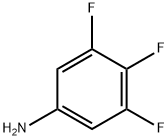
At room temperature, 300 mg (0.6 mmol) of the complex of 1,10-linphenanthroline and nickel dichloride hexahydrate, 8.01 g (122.4 mmol) of zinc powder, 13 mL of molten 1-butyl-3-methylimidazolium bromide, and 2.5 mL of H2O were added to a 25 mL three-necked flask. The mixture was stirred at 70 °C for 10 min. Then, 2.76 g (12.3 mmol) of pentafluoroacetanilide was added to the mixture. The reaction mixture was then heated and stirred at 70 °C for 2 h. The mixture was diluted with 10 mL of acetonitrile. The insoluble solids were removed by filtration. The filtrate was then washed with acetonitrile, and the solvent was evaporated. 3,4,5-Trifluoroacetanilide was stirred in hot ethyl acetate c (5 x 10 ml), and the combined organic compounds were evaporated under vacuum. The residue was mixed with 50 ml of H2O, and an aqueous sodium hydroxide solution was added to the mixture until the pH reached 13-14. The mixture was stirred for 1 hour, and the product was separated by distillation to obtain 3,4,5-trifluoroaniline. [Image: Synthesis of 3,4,5-trifluoroaniline]
Uses
3,4,5-Trifluoroaniline and other halogenated anilines have been used to study Cytochrome P450 2E1/2A6-selective inhibition on metabolic activation of dimethylnitrosamine in human liver microsomes
General Description
3,4,5-Trifluoroaniline can be prepared from pentafluoroacetanilide, via catalytic hydrodefluorination.