Uses
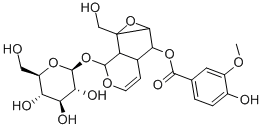
Picroside II similar to Picroside I (P437635), acts as an oxygen free radical scavenger and thus promotes anti-inflammatory activity and may be used in the treatment of arthritis or ischemic injury.
Chemical Properties
Yellow needle-shaped crystals, soluble in methanol, derived from Picrorhizoma Coptidis.
Uses
Picroside II similar to Picroside I (P437635), acts as an oxygen free radical scavenger and thus promotes anti-inflammatory activity and may be used in the treatment of arthritis or ischemic injury.
Definition
ChEBI: Picroside ii is a tannin.
Biological Activity
Picroside II displaysmany anti-cancer properties such as anti-metastatic, anti-angiogenic, and anti-apoptotic activities in both in vitro and in vivo studies.It also exerts antioxidant, anti-inflammatory, and antidiarrheal effectsagainst acute oxidative injuries such as severe acute pancreatitis-inducedintestinal barrier injury. PII has protective effects onischemia/reperfusion (I/R)-induced injury by interacting with differentmechanisms in various in vitro and in vivo models.', 'Phytochemical found in Traditional Chinese Medicine herbal preparations. Picroside II, a glucoside, is reported to have hepatoprotective, cardioprotective, and neuroprotective properties.
in vivo
Picroside II (0-20 mg/kg, i.g., given in two doses) protects liver cells from damage and prevents apoptosis[1].
Picroside II (20 mg/kg, intravenous injection, given in four doses) inhibits the activation of NLRP3 inflammasome and NF-κB pathway in mice, reducing the inflammatory response in sepsis and enhancing immune function[3].
Picroside II (20 mg/kg, intraperitoneal injection, a single dose) protects the blood-brain barrier by inhibiting oxidative signaling pathways in a rat model of ischemia-reperfusion injury[4].
Picroside II (5-20 mg/kg, i.g., once a day for seven days) has anti-lipid peroxidation effects and protects against mitochondrial damage in mice with liver injury[5].
| Animal Model: | DGalN and LPS(HY-D1056)-induced acute liver injury in mice[1] |
| Dosage: | 0, 5, 10, 20 mg/kg; administered 10 min before and 4 h after D-GalN and LPS administration |
| Administration: | i.g. |
| Result: | Reduced the levels of alanine aminotransferase and aspartate aminotransferase in the serum, decreased MDA content, had a dose-dependent effect on hepatocyte apoptosis, and upregulated the expression of the bcl-2 gene. |
| Animal Model: | Sepsis mouse model[3] |
| Dosage: | 20 mg/kg; four times injected (2 h, 14 h, 26 h and 38 h after CLP) |
| Administration: | Intravenous injection (i.v.) |
| Result: | Improved survival, reduced sepsis-related infiltration and attenuated lung injury, enhanced bacterial clearance, reduced IL-6, IL-1β, and TNF-α levels, inhibited splenic lymphocyte apoptosis, reduced p-NF-κB (p65) expression, and reduced IL-1β and caspase-1 levels. |
| Animal Model: | Rats with cerebral ischemia-reperfusion injury[4] |
| Dosage: | 20 mg/kg; single dose |
| Administration: | Intraperitoneal injection (i.p.) |
| Result: | Reduced the nervous system score, neuronal injury, BBB damage, ROS content and NADPH oxidase activity, down-regulated the protein levels of Rac-1, Nox2, ROCK, MLCK and MMP-2, and up-regulated the expression of claudin-5. |
| Animal Model: | Mouse model of liver injury induced by CCl4, D-GalN and AP[5] |
| Dosage: | 5, 10, 20mg/kg; daily; 7 days |
| Administration: | i.g. |
| Result: | Reduced the high levels of ALT and AST in serum caused by CCl4, D-GalN and AP, significantly alleviated liver cell damage, reduced MDA, and increased SOD and GSH-Px content in a dose-dependent manner, inhibited AP-induced liver toxicity in mice, enhanced ATPase activity, and improved mitochondrial swelling. |