Uses
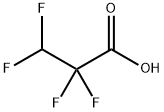
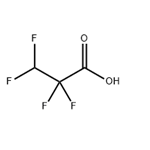
3H-Tetrafluoropropionic acid is used to produce 2,2,3,3-tetrafluoro-propionyl chloride. This reaction will need reagent benzotrichloride.
Production Methods
Flupropanate is manufactured through the same broad industrial logic used for other long-chain alkyl esters of substituted phenoxy- or benzoate-type herbicides: build the aromatic acid backbone, introduce the required halogenation pattern, then attach the characteristic propanate side chain under controlled conditions before purifying the final material. Production typically begins with assembling the substituted aromatic core, adding the fluorinated and chlorinated groups that define flupropanate’s herbicidal profile, and then forming the propanate ester through a targeted condensation or esterification step that suppresses isomer formation and unwanted by-products. Once the full molecular structure is in place, the crude product undergoes purification, often involving solvent washes, phase separations, and crystallisation, to yield technical grade flupropanate.