Chemical Properties
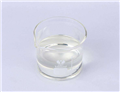
Clear colorless to brownish liquid after melting
Uses
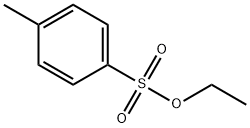
Ethyl p-toluenesulfonate can be used in the manufacture of organic synthesis, and also can be used as intermediate of methylation reagent and sensitive material. It also is flexibilizer of cellulose acetate.
Uses
Ethyl p-toluenesulfonate was used to develop an extraction method for methyl and ethyl esters of various sulfonic acids in active pharmaceutical ingredients using solid-phase micro extraction coupled to GC/MS in the selected ion monitoring mode. It was used in a study to develop a fast and accurate method for determination of residues of some common alkylating agents employed in drug synthesis by in situ derivatization-headspace-gas chromatography-mass spectrometry.
General Description
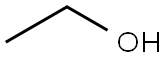
Ethyl p-toluenesulfonate (EPTS), used as a potent alkylating agent in the modern pharmaceutical industry, is classified as a potential genotoxic impurity. It is an alkyl sulfonate formed by the reaction of ethanol with p-toluenesulfonic acid during the production of active pharmaceutical ingredients. Because EPTS has the ability to alkylate DNA, it may pose risks such as carcinogenicity and teratogenicity; therefore, its content must be strictly controlled[1].

reaction suitability
reagent type: reductant
Safety Profile
Moderately toxic by
subcutaneous and intraperitoneal routes.
Questionable carcinogen with experimental
tumorigenic data. Mutation data reported.
Combustible when exposed to heat or
flame; can react with oxidzing materials. To
fight fire, use CO2, dry chemical. When
heated to decomposition it emits hlghly
toxic fumes of SOx. See also
SULFONATES and ESTERS.
References
[1] Amasa Nageswari, Khagga M., Kallam Venkata Siva Rama Krishna Reddy. (2011). A Sensitive and Simple HPLC-UV Method for Trace Level Quantification of Ethyl p-Toluenesulfonate and Methyl p-Toluenesulfonate, Two Potential Genotoxins in Active Pharmaceutical Ingredients. Scientia Pharmaceutica, 79 4, 865–876.
https://doi.org/10.3797/scipharm.1106-23