Chemical Properties
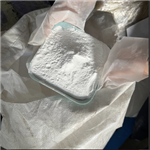
white powder
Uses
Sodium p-toluenesulfonate was used as a supporting electrolyte for depositing polypyrrole membranes. It was also used as a solute to study the performance of resin particles.
Uses
Usually used as a supporting electrolyte for depositing polypyrrole membranes, ang also used as a solute to study the performance of resin particles.
Uses
Sodiump-Toluenesulfonate can be used for high-efficiency for cleaning explosives.
Flammability and Explosibility
Non flammable
Synthesis
A kind of neutralized wastewater for BHT production, in which sodium p-toluene sulfonate is contained in 19.8% and an alkali neutralizer (alkali containing sodium ions) is contained in 3.7%. The specific steps for the production of sodium p-toluene sulfonate using this neutralization wastewater include: adding an appropriate amount of pH adjusting agent (p-toluene sulfonic acid) in the pH adjustment kettle to adjust the pH of the neutralization wastewater to 6 ~ 7, then the pump is transferred to the decolorization kettle, activated carbon is added to the decolorization kettle and the temperature is raised to 80 ~ 90 C., and stirring is carried out for one hour for decolorization, then the pump is transferred to the filter press, the activated carbon is filtered out, and the liquid enters the evaporation concentration kettle, and the evaporation concentration kettle is heated and evaporated to 120 ~ 12 C. at atmospheric pressure. The liquid goes into evaporation and concentration kettle under normal pressure, when it is heated and evaporated to 120125 at normal pressure, it enters into slicer to cool and slice to get the product of sodium p-toluene sulfonate, and the evaporated water vapor condenses and recycles to use for the preparation of alkali neutralizing agent water. The appearance of the product is white flaky solid, after sampling and analyzing, the content of sodium p-toluene sulfonate is 89.4%, which is able to reach the standard of refining grade and meet the market quality requirements.
Purification Methods
Dissolve it in distilled water, filter it to remove insoluble impurities and evaporate it to dryness. Then recrystallise it from MeOH or EtOH, and dry it at 110o. Its solubility in EtOH is not high (maximum 2.5%), so that Soxhlet extraction with EtOH may be preferable. Sodium p-toluenesulfonate has also been crystallised from Et2O and dried under a vacuum at 50o. [Beilstein 11 I 4, 11 II 6, cf Gibson & Reid J Chem Soc 879 1923.]