Chemical Properties
white to off-white crystalline powder
Uses
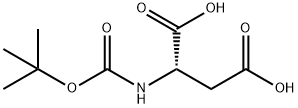
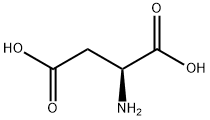
N-Boc-L-aspartic acid is an N-Boc-protected form of L-Aspartic acid (A790024). L-Aspartic acid is a nonessential amino acid that is used to biosynthesize other amino acids within the human body. L-Aspartic acid also increases membrane conductance of mammalian neurons by voltage-dependent means, causing depolarization and nerve impulses that travel to key areas of the central nervous system.
Definition
ChEBI: Nalpha-(tert-butoxycarbonyl)-l-aspartic acid is an aspartic acid derivative.
reaction suitability
reaction type: Boc solid-phase peptide synthesis
Synthesis
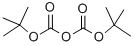
GENERAL STEPS: In a 500 mL single-necked round-bottomed flask, L-aspartic acid (4 g, 30 mmol), 1,4-dioxane (120 mL) and deionized water (60 mL) were mixed to form a heterogeneous solution. Under continuous stirring, 1 M aqueous sodium hydroxide solution was added dropwise until the solution became homogeneous and clarified, indicating complete dissolution of L-aspartic acid. Subsequently, the reaction mixture was cooled in an ice bath and di-tert-butyl dicarbonate (7.2 g, 33 mmol) dissolved in 1,4-dioxane (20 mL) was added slowly and dropwise. The reaction mixture was stirred overnight at room temperature. Upon completion of the reaction, the solvent was partially evaporated using a rotary evaporator until the final volume was about 30 mL. ethyl acetate (20 mL) was then added and the aqueous layer was acidified to pH 2 with aqueous potassium bisulfate under ice-bath cooling conditions. the mixture was transferred to a partitioning funnel, and the product was extracted with ethyl acetate (3 aliquots at a time). The organic layers were combined and dried with anhydrous sodium sulfate. Subsequently, the solvent was evaporated using a rotary evaporator and further dried under vacuum overnight to give BOC-L-aspartic acid as a white solid (6 g, 85% yield).1H NMR (600 MHz, DMSO-d6) data: δ 1.38 (s, 9H), 2.51-2.55 (m, 1H), 2.65-2.69 (m, 1H). 4.24-4.28 (m, 1H), 7.05-7.07 (d, 1H, J = 12 Hz), 12.5 (s, 2H).
References
[1] Journal of the American Chemical Society, 2015, vol. 137, # 51, p. 16084 - 16097
[2] Patent: US2017/168042, 2017, A1. Location in patent: Paragraph 0203-0204
[3] Asian Journal of Chemistry, 2014, vol. 26, # 15, p. 4716 - 4722
[4] Patent: EP1647283, 2006, A1. Location in patent: Page/Page column 5
[5] Chemistry Letters, 1988, # 10, p. 1643 - 1646