Description
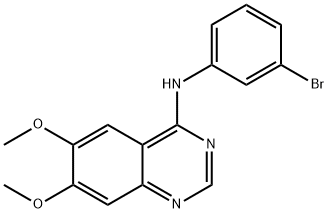
AG-1517 HCl (153436-54-5) is an ultra-potent inhibitor of epidermal growth factor receptor tyrosine kinase (EGFR), with an IC50 of 25 pM. Inhibits other tyrosine kinases at micromolar or higher concentrations. It selectively blocks EGF-mediated cellular processes including mitogenesis, early gene expression and oncogenic transformation.1Inhibits the growth of a number of cancer cell lines.2AG-1517 HCl is an extremely useful tool for exploring EGF-mediated cellular signaling.3
Chemical Properties
Yellowish solid
Uses
PD 153035 is an extremely potent and specific inhibitor of EGFR tyrosine kinase activity.
Uses
PD153035 is an inhibitor of EGFR, competitive with ATP. EGF Receptor: IC50 = 25 pM (Ki = 6 pM).
Definition
ChEBI: A member of the class of quinazolines carrying a 3-bromophenylamino substituent at position 4 and two methoxy substituents at positions 6 and 7.
Biological Activity
An extremely potent inhibitor of epidermal growth factor (EGF) receptor tyrosine kinase, with an IC 50 of 25 pM. Inhibits other purified tyrosine kinases only at micromolar or higher concentrations.
Synthesis
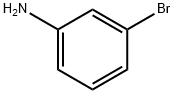
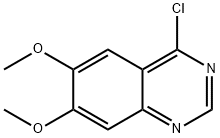
GENERAL METHOD: 4-Chloro-6,7-dimethoxyquinazoline (1 mmol) was dissolved in refluxing 2-propanol (20 mL) and m-bromoaniline (1 mmol) was added dropwise. The reaction mixture was refluxed for 3-4 hours and the progress of the reaction was monitored by TLC until completion. Upon completion of the reaction, the precipitate was filtered out and washed sequentially with 2-propanol (10 mL) and ether (10 mL). If no precipitate formation was observed, the solvent was removed under reduced pressure to obtain a solid product. The final product was purified by recrystallization from 75% ethanol solution.
References
[1] DAVID W. FRY. A Specific Inhibitor of the Epidermal Growth Factor Receptor Tyrosine Kinase[J]. Science, 1994, 265 5175. DOI:
10.1126/science.8066447[2] M BOS. PD153035, a tyrosine kinase inhibitor, prevents epidermal growth factor receptor activation and inhibits growth of cancer cells in a receptor number-dependent manner.[J]. Clinical Cancer Research, 1997, 3 11: 2099-2106.
[3] MARIE-PIER TÉTREAULT. Specific signaling cascades involved in cell spreading during healing of micro-wounded gastric epithelial monolayers[J]. Journal of cellular biochemistry, 2008, 105 5: 1240-1249. DOI:
10.1002/jcb.21924