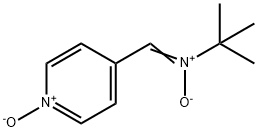
Chemical Properties
white to pale yellow crystalline powder
Uses
POBN is a cell permeable hydrophilic spin trap for in vitro studies. It is a water soluble analog of PBN with low paramagnetic impurities and does not require any further purification. POBN has also also been used in studies of DNA methylation, iron-mediated polyunsaturated fatty acid peroxidation, and free-radical formation by Alzheimer β-amyloid peptide.
Uses
Spin trap reagent used to measure ethanol oxidation to 1-hydroxyethyl radical (HER) which can bind to protein. Has also been used in studies of DNA methylation, iron-mediated polyunsaturated fatty acid peroxidation, and free-radical formation by Alzheimer β-amyloid peptide. The formation of hydroxyl radical in chondrocytes and cartilage has been detected using POBN.
in vivo
Electron spin resonance (ESR) spectrum of radical adducts detected in bile of rats 1 h after acute Sodium formate (2 g/kg) and POBN (1.5 g/kg) i.p. administration[1].
| Animal Model: | Fischer male rats (300-400 g)[1] |
| Dosage: | 1.5 g/kg (Pharmacokinetic Analysis) |
| Administration: | Injected simultaneously i.p. |
| Result: | A strong six-line ESR signal of the POBN radical adduct was detected in the bile of rats after acute sodium formate poisoning. |