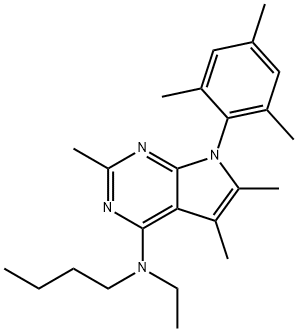
Uses
Antalarmin is a selective nonpeptide corticotropin-releasing factor receptor 1 (CRHR1) antagonist with a Ki of 2.7 nM. Antalarmin can pass through the blood–brain barrier[1][2][3].
Definition
ChEBI: Antalarmin is a pyrrolopyrimidine that is 7H-pyrrolo[2,3-d]pyrimidin-4-amine which is substituted by methyl groups at positions 2, 5, and 6, by a mesityl group at position 7, and in which the amino substituent at position 4 has been substituted by ethyl and butyl groups. It is an antagonist of corticotropin-releasing factor 1 (CRF-1) receptors (Ki = 1 nM). It has a role as a corticotropin-releasing factor receptor antagonist. It is a pyrrolopyrimidine and a tertiary amino compound.
in vivo
Antalarmin (10 mg/kg; i.p.; daily for 4 weeks) leads to an improvement of chronic mild stress (CMS)-induced modifications in mice[1].
Antalarmin (20 mg/kg; i.p.; daily for 7 days) significantly reduces Aβ1-42 levels in sub-acute stressed Tg2576 mice[2].
| Animal Model: | BALB/cByJIco male mice, chronic mild stress model[1] |
| Dosage: | 10 mg/kg |
| Administration: | Intraperitoneal injection, daily for 4 weeks |
| Result: | Induced a significant improvement of mice physical state. Induced a nonsignificant decrease of the lit box (TLB) and activity when compared to controls.
|
References
[1] Ducottet C, et al. Effects of the selective nonpeptide corticotropin-releasing factor receptor 1 antagonist antalarmin in the chronic mild stress model of depression in mice. Prog Neuropsychopharmacol Biol Psychiatry. 2003 Jun;27(4):625-31. DOI:
10.1016/S0278-5846(03)00051-4[2] Dong H, et al. Effects of corticotrophin-releasing factor receptor 1 antagonists on amyloid-β and behavior in Tg2576 mice. Psychopharmacology (Berl). 2014 Dec;231(24):4711-22. DOI:
10.1007/s00213-014-3629-8[3] Zorrilla EP, et al. Urocortin shares the memory modulating effects of corticotropin-releasing factor (CRF): mediation by CRF1 receptors. Brain Res. 2002 Oct 18;952(2):200-10. DOI:
10.1016/s0006-8993(02)03345-0